
NANDAN JADHAV
Game Designer


Pizza Panic
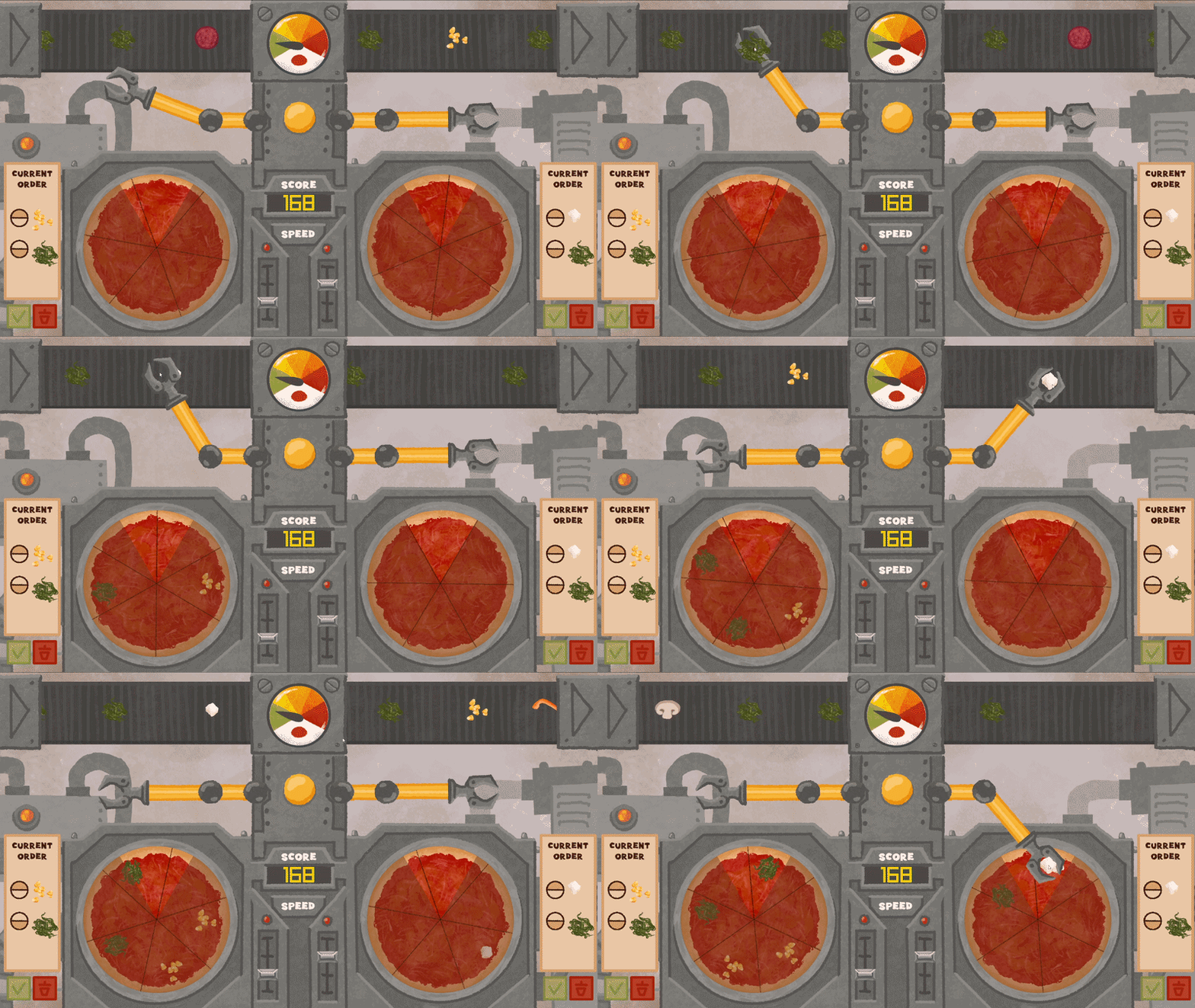
Pizza Panic is a fast-paced pizza assembly game created during a one-week game jam. Players place ingredients on rotating pizzas to match increasingly complex customer orders while balancing speed, accuracy, and risk!
Role: Gameplay & Technical Designer
Platform: Web / PC
Team Size: 5
Jam Theme: Spin to Win
Key Contributions:
-
Gameplay Design
-
Scoring & Balance
-
Difficulty Progression
-
Playtesting & Iteration
Tools & Software:
-
Raylib
-
Aseprite
-
Miro & Trello
My Role
I was the primary gameplay designer on Pizza Panic, responsible for developing the core gameplay from the initial concept through playtesting and final balancing. I worked closely with our programmers to translate design ideas into playable systems, test them quickly, and iterate based on how they affected the overall experience.
Core Gameplay
I helped develop the initial concept around the jam theme “Spin to Win,” using a continuously rotating pizza as the foundation for the core interaction. The player needed to read an order, collect ingredients from the conveyor, and place them onto the correct sections of the pizza while it remained in motion.
My focus was making the spinning mechanic more than a visual gimmick. Rotation needed to directly affect the player's timing, accuracy, and decision-making while still feeling predictable enough for players to improve with practice.
DESIGN FOCUS: Readability · Timing · Spatial Accuracy · Player Mastery
Systems & Progression
Once the core interaction was established, I designed supporting systems that could increase pressure without requiring players to continually learn new mechanics. Difficulty was built around changing variables the player already understood: pizza speed, order complexity, ingredient availability, and eventually managing multiple pizzas.
Order patterns progressed from straightforward full-pizza orders to more demanding Half-and-Half and Alternating arrangements. As these systems overlapped, the challenge shifted from simply placing ingredients correctly to managing attention, timing, and prioritization.

Order complexity scaling with game time
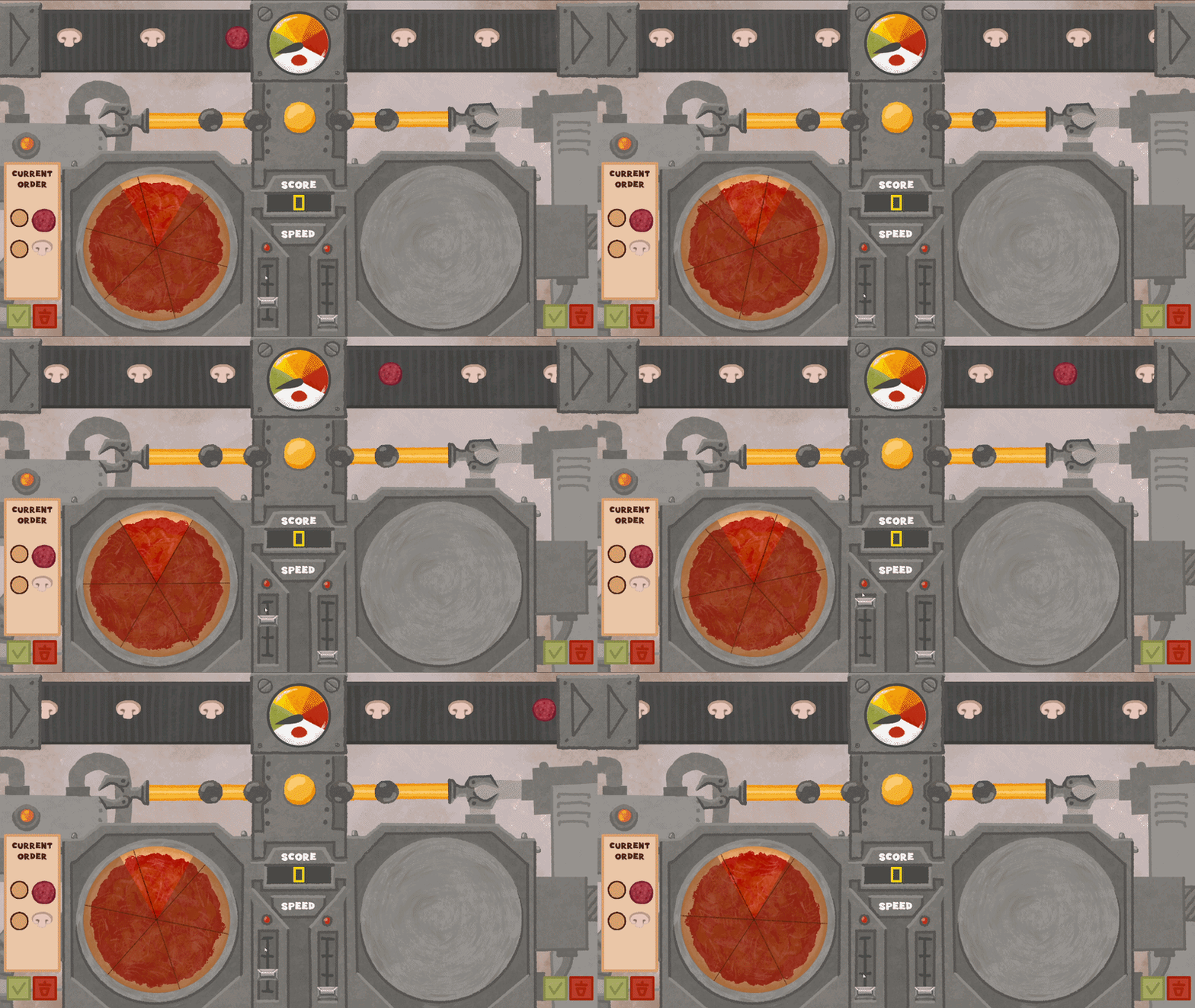
Player controlling pizza speed for higher score multiplier
Scoring & Balance
Rewarding Risk and Mastery
The scoring system was designed to reward players for more than simply completing orders. I wanted higher scores to reflect a player's willingness to take on additional difficulty while still maintaining accurate ingredient placement.
To accomplish this, I tied scoring directly to two of the game's primary difficulty variables: order complexity and pizza speed. More difficult patterns provide larger rewards, while players can voluntarily increase rotation speed for an additional score multiplier. This creates an opt-in risk/reward system in which players decide how much mechanical difficulty they are comfortable taking on.
Base Score
Every successfully completed pizza starts with a base value of 50 points, providing a consistent foundation before difficulty modifiers and penalties are applied.
Increased difficulty only has value if the player can still execute the order correctly. Incorrect ingredients, improper placement, and unnecessary repeated toppings reduce the value of the completed pizza.
These penalties discourage players from simply maximizing speed and placing ingredients carelessly. The intended strategy is instead to find the highest level of difficulty the player can execute consistently.

Performance Ranks
Rather than ending the game with a numerical score alone, I added performance grades and themed titles to provide players with a clearer benchmark for their run. This gives the final score additional context and creates a straightforward replay goal: improve your grade on the next attempt.
Design Intent
Make increased difficulty valuable, not mandatory.
The scoring system creates an opt-in mastery curve. Players can learn the game at their own pace, but improving their ability to handle complex patterns at higher speeds provides significantly greater scoring potential.
